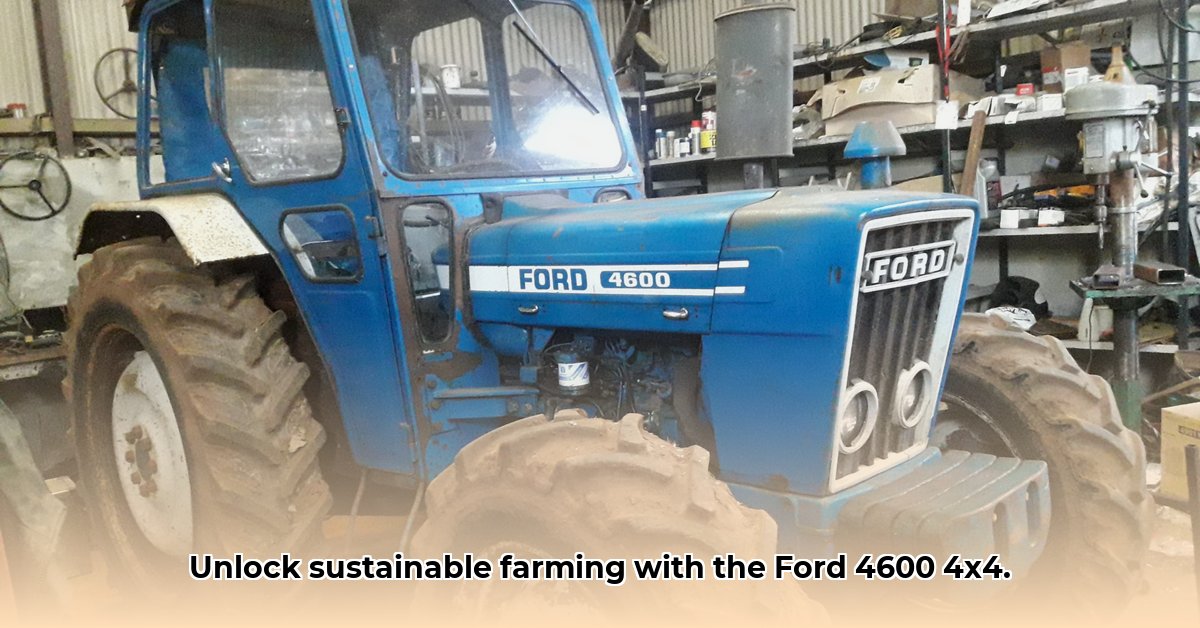
Thinking about a used Ford 4600 4x4 tractor for your farm? This guide provides a data-driven analysis to help you decide if it aligns with your sustainable farming goals and budget. We'll explore its operational costs, compare it to newer models, and offer practical maintenance tips. Whether you're a seasoned farmer or just starting, this guide offers actionable intelligence. For detailed specifications, check out the Ford 4600 specs.
The Ford 4600 4x4: Affordability and Longevity
The Ford 4600 4x4's primary appeal lies in its affordability. Used models offer substantial cost savings compared to new tractors—potentially thousands of dollars less. This makes it attractive for smaller farms or those beginning their agricultural journey. However, this lower initial cost often translates to higher potential repair expenses due to accumulated hours of operation. Is the upfront savings worth the potential increase in future maintenance costs?
Fuel Efficiency and Environmental Impact
Older tractors like the Ford 4600 4x4 generally exhibit lower fuel efficiency than their modern counterparts. This directly increases operating expenses and your farm's carbon footprint. While precise fuel consumption figures for this specific model are difficult to obtain universally, thorough research into comparable models is crucial. The trade-off between initial cost and potential long-term fuel consumption needs careful consideration.
Maintenance and Repair: A Proactive Approach
Regular maintenance is paramount for any used tractor, including the Ford 4600 4x4. Sourcing parts for older models might prove challenging and expensive. Before purchasing, establish a reliable parts procurement strategy. This might involve building relationships with local mechanics and suppliers, or exploring online communities dedicated to Ford 4600 maintenance. What's your backup plan if a critical part needs urgent replacement?
Technology and Operational Efficiency
Compared to newer tractors, the Ford 4600 4x4 lacks advanced technologies such as GPS-guided systems. These technologies, while expensive upfront, enhance efficiency and resource optimization, potentially resulting in significant long-term savings. The decision hinges on whether the potential savings from improved efficiency justify the additional investment in a newer model, or whether your farm can function effectively without these features.
Regional Considerations: Local Factors Affecting Sustainability
The market for used Ford 4600 4x4 tractors varies regionally. Availability, condition, and even regulatory compliance differ significantly. Before making a purchase, consider local regulations, the availability of skilled mechanics familiar with this model, and the ease of sourcing parts. What works in one area may not be feasible in another.
Actionable Intelligence: A Step-by-Step Guide to Sustainable Use
To maximize the Ford 4600's lifespan and sustainability, consider these steps:
Comprehensive Pre-Purchase Inspection: A thorough inspection by a qualified mechanic is crucial to identify potential issues before purchasing. This preventative measure can save you considerable time and money in the long run.
Develop a Rigorous Maintenance Schedule: Regular preventative maintenance is critical. Schedule regular oil changes, filter replacements, and thorough inspections of key components to minimize the risk of unexpected breakdowns.
Establish Reliable Parts Suppliers: Identify and build relationships with reliable parts suppliers, both local and online, ensuring a consistent stream of necessary components for repairs and replacements.
Implement Smart Fuel Management Practices: Optimize field operations to improve fuel efficiency. This includes minimizing idling time, choosing appropriate speeds for the terrain and task, and planning efficient routes.
Investigate Strategic Upgrades: Identify potential efficiency-enhancing upgrades based on your budget and specific farm needs. This might involve modernizing certain systems to meet regulatory standards or improve productivity.
Risk Assessment Matrix: Potential Challenges and Mitigation Strategies
| Factor | Likelihood of Issue | Impact of Issue | Mitigation Strategy |
|---|---|---|---|
| Engine Failure | Moderate | High | Pre-purchase inspection; regular maintenance; preventative engine rebuild if necessary. |
| Hydraulic System Problems | Moderate | Medium | Regular fluid checks; prompt leak repairs; system overhaul during purchase consideration. |
| Parts Availability | High | Medium | Secure multiple parts suppliers; maintain a stock of common parts; build relationships with local mechanics. |
| Regulatory Non-Compliance | Low | Medium | Stay informed on relevant regulations; budget for upgrades or modifications as needed. |
Dr. Anya Sharma, Agricultural Engineering Professor at Cornell University, states, "Investing in a used tractor presents both opportunities and challenges. A thorough pre-purchase assessment and a dedicated maintenance plan are crucial for long-term sustainability and cost-effectiveness."
The Ford 4600 4x4 offers a potential pathway to sustainable farming, particularly for budget-conscious farmers. However, success hinges on proactive planning, informed decision-making, and a commitment to thoughtful maintenance. Remember, sustainable agriculture isn't just about the technology; it's about the responsible stewardship of resources and the long-term health of your land.